

close
Choose Your Site
Global
Social Media
Views: 0 Author: Site Editor Publish Time: 2026-09-22 Origin: Site


Industrial drainage needs more than an opening in the floor. The grate must pass water at the required rate, resist the applied load, control debris, fit the channel geometry, and remain practical to inspect and clean. In public or pedestrian areas, slot geometry and surface finish also affect safety and appearance. A wedge wire drain grate uses parallel V-profile wires welded to support rods, creating continuous linear openings. That configuration can provide a controlled drainage surface for trench and channel systems when it is correctly specified for the environment.
Wedge wire grates use continuous slots that can distribute drainage across the length of a channel.
The slot width, support-rod arrangement, material, frame, and load condition must be specified together.
A grate should be selected for the actual drainage, debris, cleaning, and traffic conditions—not appearance alone.
Stainless steel selection needs an environment-specific review, especially around chlorides and cleaning chemicals.
The visible surface is made from profile wires with a wedge-shaped cross-section. The narrow face sets the slot opening, while the geometry widens beneath the surface. This creates a linear intake path rather than isolated perforations. In drainage use, that can support smooth water entry and give a clean architectural or industrial finish. The construction is particularly relevant where a channel needs a continuous cover with controlled openings.
The wedge wire linear drain grate category describes a stainless-steel series for linear trench systems and identifies heel-guard slot design as a consideration for public-facing drainage. That is a useful starting point, but a category description is not a project specification. The final grate must be sized for channel width, outlet capacity, expected debris, traffic, local safety rules, and maintenance access.
A grate does not create drainage capacity by itself. Capacity is limited by the grate’s effective open area, channel geometry, slope, outlet position, pipe size, downstream restrictions, and the type of liquid and debris expected. A wide channel with a narrow outlet can still surcharge. Likewise, a very open grate can become inefficient if leaves, sediment, packaging, process solids, or residue are allowed to accumulate below it.
Specification question | Why it matters | What to confirm |
|---|---|---|
What liquid reaches the drain? | Viscosity, solids, oils, and chemicals affect flow and cleaning. | Process conditions and compatible materials. |
What is the peak inflow? | Peak events govern channel and outlet sizing. | Design flow and drainage layout. |
What debris is expected? | Slot width must balance capture and cleanability. | Particle size, volume, and cleaning frequency. |
Who crosses the grate? | Pedestrian, cart, and vehicle loads differ. | Load class, frame, fixation, and local requirements. |
How will it be cleaned? | Access and cleaning agents affect lifecycle performance. | Lift-out sections, channel access, and chemical compatibility. |
Wedge wire construction gives water multiple linear entry points along the grate. The V-profile can reduce the contact area where some particles rest at the narrow opening, which may help debris release during washing or flow. This is not a promise of zero blockage: fibrous waste, grease, scale, and compacted sediment can still block any drainage system. The benefit comes from a geometry that combines controlled openings with an accessible, robust surface.
For a completed component, the stainless steel wedge wire linear drain grate is a relevant internal product page. It describes a V-wire construction for linear trench drainage and heel protection. Project teams should still request the applicable dimensions, material, support spacing, frame details, and load information for the actual installation rather than assuming one configuration fits every channel.
The slot is a safety, maintenance, and hydraulic decision. Very narrow openings may improve heel or footwear compatibility but can require more frequent cleaning where fine debris is present. Wider openings can pass water and larger particles more readily but may be unsuitable in pedestrian areas or where objects must be retained. The right answer depends on the users of the space and the drainage load.
In food, beverage, process, workshop, poolside, landscape, or commercial settings, also consider cleaning tools and worker access. A grate that looks smooth but cannot be removed or flushed effectively may create a hygiene or maintenance burden. Pair the grate with a channel and access strategy, such as a metal drainage ditch, that allows sediment to be reached before it affects drainage capacity.
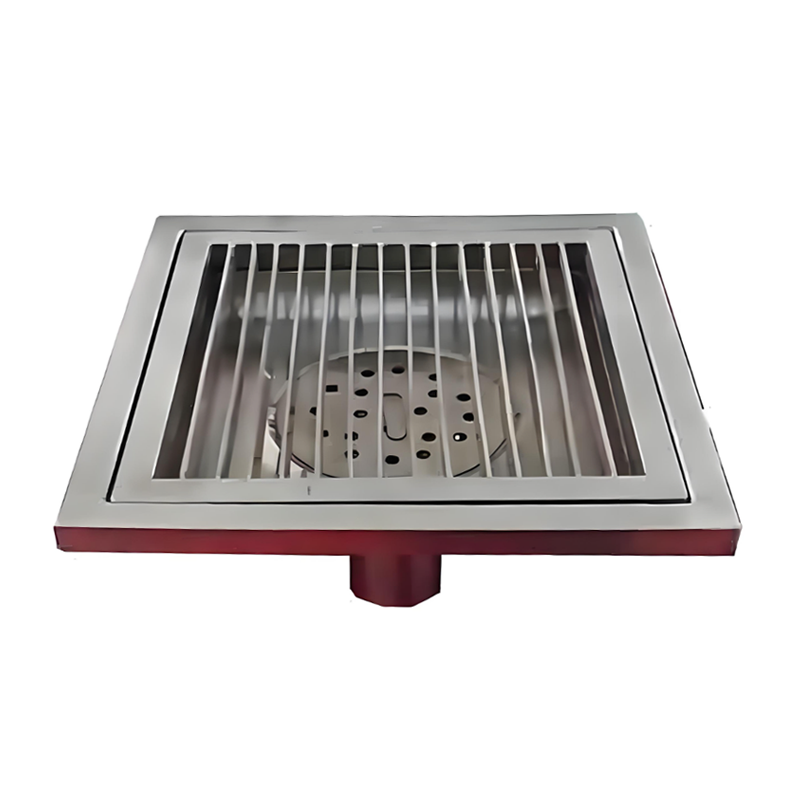
Stainless steel is widely chosen for drainage covers because it can provide a durable, cleanable surface, but it must be selected for the operating environment. Chloride exposure, coastal air, pool chemicals, industrial washdown agents, and galvanic connections can alter the material decision. Review the material grade, finish, weld condition, and cleaning chemicals together. Never assume that any stainless steel grate is suitable for every corrosive environment.
The support system matters as much as the visible wires. Support-rod spacing, wire profile, crossbars, perimeter frame, channel seat, anchoring, and the transition to surrounding floor construction determine how the load is carried. For facilities with heavier service conditions, compare the grate with the associated industrial floor drain solutions and verify the complete assembly’s intended use. Do not make a load claim without project-specific confirmation.
Drainage performance declines when channels are left to collect sediment and process debris. Build a maintenance routine around the actual waste stream: visual checks, lift-out access where appropriate, cleaning frequency, and disposal of captured solids. Avoid tools that can bend profile wires or damage welds. If washdown is used, confirm that cleaning agents and water temperature are compatible with the grate, channel, seals, and nearby flooring.
A wedge wire grate can be part of a coordinated drainage system rather than a decorative cover. The broader metal floor drain range is useful for considering related drainage components. Anping Shuoqiao Trading Co., Ltd. lists both wedge filter screen and drainage product categories; for an industrial project, the designer should turn those product options into a documented drainage and maintenance specification.
A wedge wire drain grate can be a strong choice where continuous slot drainage, controlled debris handling, cleanability, and a durable stainless-steel surface align with the project conditions. Its success depends on more than the grate: specify the slot, support structure, channel, outlet, loading, material environment, and access for maintenance as one system. Shuoqiao’s wedge wire drainage products provide a useful starting point, while the final selection should be confirmed against site flow, safety, and service requirements.
It is a drainage cover made from parallel wedge-shaped profile wires welded to support rods, creating continuous linear slots for water entry.
They can be suitable when their slot geometry, support construction, material, channel fit, and load conditions are specified for the project’s liquids, debris, and traffic.
No grate is immune to clogging. The V-wire slot geometry can support debris release, but maintenance remains necessary when sediment, fibers, grease, or process solids are present.
Balance required flow, expected debris, pedestrian or traffic safety, cleaning method, and local requirements. Do not select by appearance alone.
Only after checking the grade, weld condition, cleaning chemicals, exposure concentration, and the full drainage-system materials against the actual environment.


