

close
Choose Your Site
Global
Social Media
Views: 0 Author: Site Editor Publish Time: 2026-04-07 Origin: Site


Water treatment systems are under growing pressure to deliver cleaner water, reduce downtime, control maintenance costs, and operate more sustainably. Whether the application involves municipal water supply, industrial process water, groundwater extraction, wastewater treatment, or desalination pretreatment, filtration performance plays a decisive role in overall plant efficiency. In this context, the design of the screening component matters far more than many buyers initially expect. Among the many filtration elements used in the industry, Wedge Wire Screen Tubes have become a preferred solution because they combine structural strength, precise slot openings, and excellent hydraulic performance in one durable product. Their unique profile makes them especially valuable in demanding water treatment conditions where consistent flow, low clogging risk, and long service life are essential. For engineers, plant managers, distributors, and OEM buyers, understanding how wedge wire technology improves filtration efficiency is not just useful knowledge—it directly supports better equipment selection and long-term operational results.
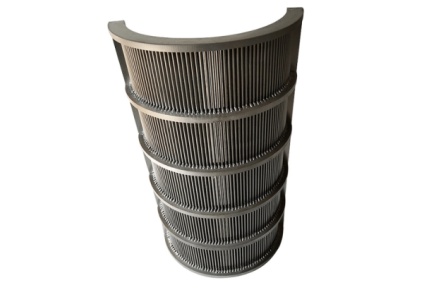
Wedge Wire Screen Tubes are cylindrical filtration elements made by welding specially shaped profile wires around support rods. The surface wire is typically V-shaped, creating a continuous slot opening between adjacent wires. This is one of the most important design features, because it allows water to pass through while retaining particles according to the required filtration rating.
Unlike perforated tubes or woven mesh structures, wedge wire tubes offer a highly controlled slot geometry. The opening is narrow at the top and wider toward the inside, which helps reduce clogging and allows trapped particles to release more easily during cleaning. This structure makes wedge wire tubes highly effective in water treatment processes where steady flow and reliable solids separation are critical.
They are widely used in:
· intake screens
· well screens
· resin traps
· nozzles and collectors
· pressure and gravity filtration systems
· drum filters and mechanical separation equipment
Filtration efficiency is about more than simply removing solids from water. A highly efficient filtration component should support the entire treatment system by balancing several factors at once:
· particle retention performance
· flow rate stability
· pressure drop control
· resistance to plugging
· cleaning convenience
· durability in continuous operation
If a filtration component clogs too quickly, deforms under pressure, or creates excessive resistance, the whole treatment line may suffer. Pumps work harder, energy consumption rises, cleaning cycles become more frequent, and production efficiency drops. In some cases, poor filtration performance can even affect downstream equipment such as membranes, ion exchange systems, spray nozzles, and process lines.
This is why Wedge Wire Screen Tubes have gained so much attention. They are designed not only to filter, but to do so in a way that supports stable plant operation.
One of the main reasons Wedge Wire Screen Tubes improve filtration efficiency in water treatment is their continuous slot structure. Instead of isolated holes, they offer long, narrow openings that distribute flow more evenly across the entire screen surface.
Because the open area is spread across the tube surface, water enters or exits more uniformly. This helps reduce localized stress and improves the consistency of the filtration process.
A well-designed wedge wire structure allows water to pass with less resistance than many conventional alternatives. Lower pressure drop means improved hydraulic efficiency and reduced strain on pumps and supporting equipment.
The geometry of wedge wire creates a relatively high open area compared with some punched or drilled screens. More open area generally supports better throughput and more stable performance under load.
Together, these features make wedge wire tubes an excellent choice for systems that must process large water volumes without sacrificing filtration quality.
In real-world water treatment, clogging is one of the most common causes of efficiency loss. Suspended solids, organic matter, fibrous debris, slime, and fine particles can gradually accumulate on filtration surfaces. Once blockage starts, flow decreases, pressure rises, and maintenance becomes more frequent.
This is where the V-shaped wire profile offers a major benefit.
The outer slot is narrow, but the interior of the opening becomes wider. That means particles are less likely to become permanently wedged inside the opening. Instead of lodging deep into the screen, they tend to remain on the surface where they are easier to remove through backwashing, brushing, or mechanical cleaning.
· less risk of deep particle embedding
· improved backwash response
· longer operating cycles between cleanings
· more stable filtration under variable water quality
In water treatment plants where uptime is closely linked to profitability and compliance, this anti-clogging behavior makes a measurable difference.
Another major advantage of Wedge Wire Screen Tubes is that they combine fine filtration capability with strong mechanical integrity. In many applications, a screen must withstand not only hydraulic pressure but also vibration, abrasion, handling stress, and continuous exposure to water with varying chemical characteristics.
The welded construction of wedge wire tubes provides:
· high structural rigidity
· accurate slot tolerances
· good resistance to deformation
· compatibility with stainless steel and other corrosion-resistant materials
This combination of precision and strength is especially important in deep well systems, pressurized filtration units, and industrial water treatment environments where equipment must perform reliably over long periods.
Below is a simple comparison to help illustrate why wedge wire tubes are often selected over more conventional screening options.
Feature | Wedge Wire Screen Tubes | Perforated Tubes | Woven Mesh Tubes |
Slot/opening precision | High | Medium | Medium to high |
Anti-clogging performance | Excellent | Moderate | Lower in heavy solids conditions |
Open area | High | Moderate | Varies |
Mechanical strength | High | High | Lower than welded structures |
Cleaning efficiency | Excellent | Moderate | Often more difficult |
Service life in harsh water systems | Long | Medium | Medium |
This is not to say other options have no value. Perforated and mesh structures still serve many applications well. However, when filtration efficiency, cleaning performance, and durability must all be prioritized together, wedge wire tubes are often the more balanced solution.
Wedge Wire Screen Tubes are used in a wide range of water treatment scenarios because their design can be adapted to different flow rates, slot sizes, diameters, and installation conditions.
They are commonly used as well screens to prevent sand and gravel intrusion while allowing efficient water inflow. Their high open area and mechanical strength make them well suited for long-term underground operation.
Factories often use wedge wire tubes in cooling water systems, process water filtration, and pretreatment lines. In such settings, the ability to resist clogging and support continuous operation is especially valuable.
Municipal plants may use wedge wire components in intake screening, sludge dewatering, and filtration support systems. Because these operations process large water volumes every day, reliability and ease of cleaning are major advantages.
Wastewater conditions can be highly variable, often containing fibrous matter, biological solids, and suspended particles. Wedge wire tubes help manage these conditions by maintaining flow and resisting blockage better than many conventional screens.
As water treatment systems become more demanding, the need for reliable and efficient filtration components will only continue to grow. Wedge Wire Screen Tubes stand out because they improve filtration efficiency through a combination of continuous slot openings, anti-clogging behavior, strong welded construction, customizable design, and long-term service value. They do not simply act as passive barriers; they actively support smoother flow, easier cleaning, and more stable plant performance. For projects where filtration consistency and durability matter, they remain one of the most practical and technically balanced solutions available. From our perspective, the best results come when screen design is matched carefully to the application rather than selected only by price or appearance. At Anping Shuoqiao Trading Co., Ltd., we believe buyers benefit most from clear technical communication, suitable material selection, and product specifications built around actual operating conditions. If you are reviewing screen tube options for a water treatment project and want a more grounded understanding of what will work best, it may be helpful to learn more from Anping Shuoqiao Trading Co., Ltd. and discuss the right direction in a practical way.
Their continuous slot design provides better flow distribution, lower clogging risk, and often a higher effective open area, which improves overall filtration performance.
Yes. They are widely used in wastewater systems because they perform well under variable solids loading and are easier to clean than many conventional screen structures.
Stainless steel grades such as 304, 316, and 316L are commonly used due to their strength, corrosion resistance, and long service life.
Yes. They can be customized in slot size, diameter, length, wire profile, support structure, and connection style to match specific treatment requirements.


