

close
Choose Your Site
Global
Social Media
Views: 0 Author: Site Editor Publish Time: 2026-04-10 Origin: Site


In food processing, screen performance affects much more than simple separation. It influences product quality, line efficiency, cleaning time, maintenance frequency, and even compliance with hygiene expectations. That is why choosing the right wedge wire screen panels for food processing should never be treated as a routine purchasing decision. A panel that works well in one line may fail quickly in another if the slot opening, material grade, support structure, or flow direction is not matched to the actual process. Whether the application involves washing vegetables, filtering starch slurry, separating solids from liquids, or dewatering food by-products, the right wedge wire panel helps maintain a smoother operation with less clogging, better drainage, and longer service life. For processors and equipment buyers, the goal is not simply to buy a screen panel, but to select one that fits the realities of production.
Wedge wire screen panels are valued in food processing because they combine strength, open area, and cleanability in one design. Their profile wire structure creates precise slot openings while maintaining a robust surface that can handle demanding operating conditions.
Compared with some alternative screening materials, wedge wire panels offer several practical advantages:
· Accurate slot control for screening and separation
· High mechanical strength under continuous operation
· Smooth surface profile that supports easier cleaning
· Good drainage performance in wet processing environments
· Lower clogging tendency thanks to the wedge-shaped wire design
These benefits make them suitable for many food-related operations, including:
· fruit and vegetable washing lines
· grain cleaning systems
· sugar and starch processing
· meat and poultry wastewater treatment
· beverage filtration support systems
· dewatering and residue handling
A common mistake is to begin by comparing panel dimensions before understanding the product being processed. In reality, the characteristics of the material moving across the screen should drive the selection process.
Ask these questions first:
A soft fruit pulp behaves very differently from grain, potato mash, spent grains, or protein residue. Fragile products require gentler handling, while abrasive materials demand stronger wear resistance.
Wet processing usually emphasizes drainage, anti-clogging performance, and corrosion resistance. Dry processing may place more focus on sizing accuracy and structural stability.
The function may be:
· filtering
· dewatering
· grading
· retaining solids
· supporting transport
· removing waste particles
Once that goal is clear, panel specifications become easier to define.
Slot size directly affects separation efficiency, product loss, and cleaning behavior. If the slot is too narrow, the screen may blind easily and reduce throughput. If it is too wide, valuable product may pass through or the filtration result may become inconsistent.
In food processing, slot selection should consider:
· particle size distribution
· expected flow rate
· moisture content
· acceptable product loss
· cleaning frequency
· viscosity of the material
A processor handling fibrous vegetable waste, for example, may need a wider opening to reduce plugging, while a starch recovery line may require a much finer slot for better retention. There is no universal slot size that suits every food application.
Smaller slots are usually chosen for fine separation and liquid-solid retention, while larger slots are better for heavy drainage, coarse separation, or applications with sticky solids.
Still, “smaller is better” is not always true. In many cases, a slightly larger slot leads to better line performance because it reduces blockage and improves usable capacity.
For food grade wedge wire panels, the material choice is just as important as the slot opening. Stainless steel is widely preferred because it offers corrosion resistance, durability, and suitability for sanitary environments. However, not all stainless grades perform equally in all food plants.
The most common options include:
This is a popular general-purpose choice for many food applications. It offers good corrosion resistance and works well in standard processing conditions where exposure to aggressive chemicals or salt is limited.
This grade is usually preferred when the process involves:
· higher chloride exposure
· more aggressive cleaning chemicals
· salt-rich products
· stricter corrosion resistance requirements
In some wet and chemically demanding environments, 316 or 316L can provide a longer service life and better long-term value.
Even when the base material is correct, poor finishing can create hygiene issues. Food processors should pay attention to:
· smooth surface treatment
· uniform slot profile
· clean welds
· absence of burrs or rough edges
These details influence how easy the panel is to clean and how well it performs over time.
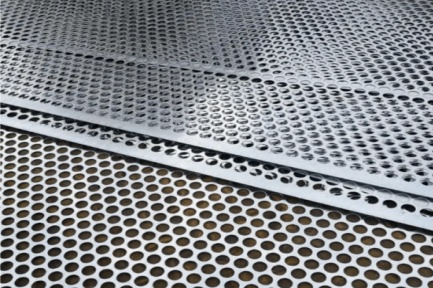
Two wedge wire panels made from the same stainless steel can behave very differently if their structural design is not suited to the equipment. Selection should therefore include more than material and slot size alone.
The direction in which product moves across the wires affects drainage and self-cleaning behavior. In some installations, correct wire orientation can significantly improve efficiency.
Closer support rod spacing generally improves strength, but it may also influence open area and cost. Heavy-load food applications often need a stronger support structure.
A thin panel may reduce initial cost, but if it deforms under load, the long-term result can be worse. Rigidity matters in vibrating screens, static drains, and continuous dewatering systems.
Panels may be welded, bolted, drop-in, or custom-framed depending on the machine. A mismatched installation design can create leakage, vibration issues, or difficult replacement procedures.
In food plants, hygiene is not a secondary issue. Screen panels must support frequent cleaning without becoming weak points in sanitation routines. That is why stainless steel wedge wire screens are often chosen for food lines that require washdown and repeatable cleaning performance.
A well-designed panel helps because the wedge wire profile reduces the chance of particles lodging deeply in the openings. Smooth surfaces also make it easier to remove residues during manual cleaning or clean-in-place procedures.
When reviewing hygiene performance, consider:
· whether the surface is easy to rinse
· whether residues are likely to accumulate in corners or weld joints
· whether the panel can tolerate chemical cleaning agents
· whether removal and reinstallation are simple for maintenance crews
If a panel is efficient during production but difficult to sanitize, it may create hidden costs through longer cleaning cycles and more downtime.
Different food sectors place different demands on screen panels. The table below offers a practical comparison.
Food processing application | Main challenge | Recommended focus | Common material choice | Typical panel priority |
Fruit and vegetable washing | High moisture, organic debris | Drainage and anti-clogging | 304 / 316 stainless steel | Smooth surface, easy cleaning |
Potato or starch processing | Fine solids recovery | Precise slot control | 316 / 316L in harsher environments | Fine filtration, dimensional accuracy |
Grain and cereal handling | Wear and continuous throughput | Mechanical strength | 304 stainless steel | Structural stability |
Meat or poultry by-product handling | Fat, protein residue, sanitation | Hygiene and corrosion resistance | 316 / 316L stainless steel | Cleanability and chemical resistance |
Beverage or liquid filtration support | Flow consistency | Uniform slots and smooth finish | 304 / 316 stainless steel | Precision and cleanliness |
Waste dewatering | Heavy solids load | Strength and drainage | 304 / 316 stainless steel | Strong support and long life |
This table is only a general guide. The final specification should always reflect actual operating conditions, including temperature, load, chemical exposure, and maintenance routine.
Choosing the right wedge wire screen panels for food processing is really about understanding the process in detail and selecting a panel that supports both production goals and hygiene standards. In our experience, the best results come when buyers look at the full picture: product characteristics, slot performance, material grade, cleaning routine, machine structure, and long-term operating value. At Anping Shuoqiao Trading Co., Ltd., we usually encourage customers to compare panel options based on actual application needs rather than catalog descriptions alone. If you are evaluating replacement panels, designing a new line, or looking for a more suitable food-grade screening solution, it is worth discussing the details with a supplier that understands both fabrication and practical use conditions. We believe careful specification leads to better reliability, better sanitation performance, and a more efficient food processing system overall. Readers who want to explore suitable options in more depth are welcome to learn more from Anping Shuoqiao Trading Co., Ltd.
For many standard food applications, 304 stainless steel is a practical choice. If the process involves salt, aggressive cleaning chemicals, or a more corrosive environment, 316 or 316L is often a better option.
The right slot size depends on particle size, flow rate, moisture content, and the purpose of the screen. A finer slot improves retention, while a wider slot may improve drainage and reduce clogging.
Yes, one of their major advantages is a smooth profile that helps reduce material build-up. Proper finishing and panel design make them especially suitable for food plants with frequent sanitation routines.
Yes. Many manufacturers can provide custom dimensions, support structures, edge framing, and slot configurations to match existing machines and process demands.


