

close
Choose Your Site
Global
Social Media
Views: 0 Author: Site Editor Publish Time: 2026-09-18 Origin: Site


PVC and stainless steel water well screens can both be appropriate, but they solve different project constraints. The right material depends on the geology, installation depth, structural loads, groundwater chemistry, slot-control requirements, completion method, and future maintenance plan. Price alone is a weak selection criterion because a material that is economical at purchase can create higher risk if it is poorly matched to the borehole or operating environment. The comparison should start with the well design and the actual conditions the screen will face.
PVC can be suitable where its strength, chemical compatibility, and installation limits match the design.
Stainless steel is commonly selected where welded continuous slots, mechanical strength, and corrosion resistance are required.
Groundwater chemistry must be evaluated for both corrosion and chemical compatibility; no material is universally immune.
Compare the complete screen construction and completion plan, not just the pipe material.
PVC screen is valued for corrosion resistance in many water environments, low weight, and straightforward handling. It can be a practical option for appropriate depths and loads. However, it has limitations in stiffness, impact resistance, connection design, temperature exposure, and some chemical environments. It must be specified with sufficient wall and structural capacity for the installation method and long-term downhole load.
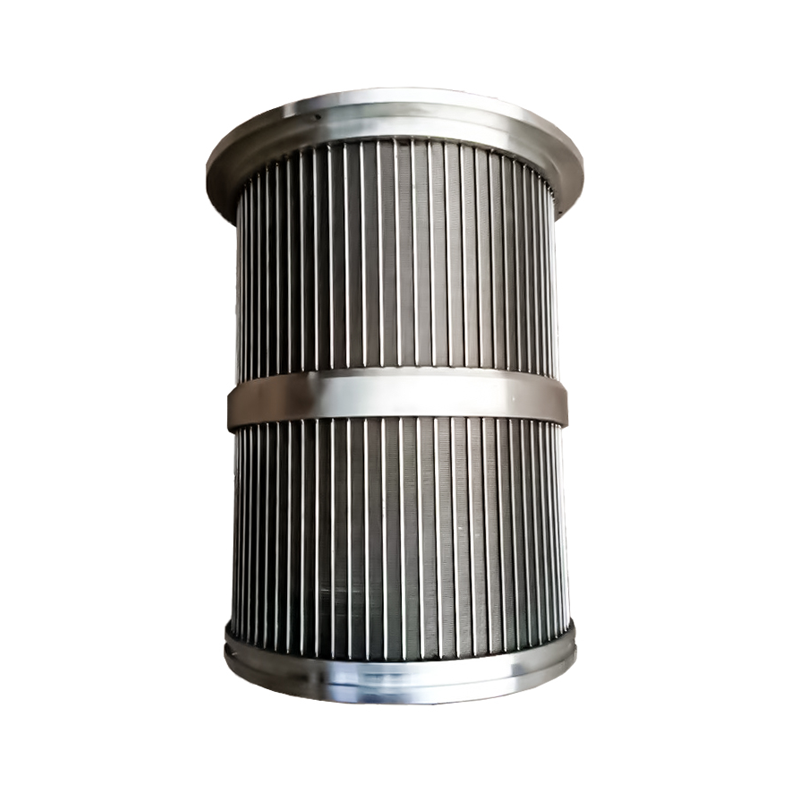
Stainless steel screens are often used when the project requires a strong welded construction, precise continuous slot openings, or high open area. A water well stainless steel wire screen is relevant when selecting a profile-wire construction. Stainless is not one material in practice: grade selection and weld quality must be reviewed against the site’s chloride level, pH, dissolved gases, scaling tendency, cleaning approach, and galvanic connections.
Decision factor | PVC | Stainless steel |
|---|---|---|
Structural demands | Confirm depth, collapse, handling, and installation limits. | Often selected for robust welded and load-bearing screen constructions. |
Slot geometry | Available constructions vary by supplier and design. | Continuous V-wire slots can provide controlled openings and high open area. |
Corrosive groundwater | Often resists many corrosion mechanisms, but chemical compatibility still matters. | Grade must be matched to groundwater chemistry and connected materials. |
Handling | Lightweight but can be vulnerable to impact or unsuitable loading. | Requires careful handling to avoid deformation but offers strong construction. |
Maintenance | Consider chemical compatibility and accessibility. | Consider alloy compatibility with scale-removal and rehabilitation methods. |
The water analysis should inform material selection before procurement. Chlorides, acidity or alkalinity, dissolved oxygen, iron, manganese, sulfate-reducing conditions, scaling potential, and planned chemical treatments can all change the risk profile. A generic claim that stainless steel “does not corrode” is misleading, just as a generic claim that PVC is unaffected by all conditions is misleading. The borehole environment, mechanical condition, and connected components are decisive.
If stainless construction is selected, specify the required material grade, wire and support-rod arrangement, connection materials, and any traceability or inspection requirements. A stainless steel wedge V-wire slot sieve illustrates the continuous profile-wire approach used where slot uniformity is important. Verify the actual supplied material rather than assuming an alloy from the product category.
Material selection does not replace sand-control design. The screen slots still need to match the formation or filter pack, and the available open area must support the intended hydraulic loading. Continuous-slot wedge-wire construction may distribute inflow over a large area and offer a profile that helps particles move away from the slot face. A wedge filter screen is therefore often considered for demanding filtration and water-related uses, but the completed well must still be developed correctly.
PVC may be specified as slotted casing or another screen construction. Compare actual open area, slot accuracy, joint behavior, and structural support rather than treating all PVC screens as identical. A very fine slot with limited effective area can restrict inflow regardless of the material selected.
Handling damage can undermine either material. PVC should not be subjected to bending, impact, or installation forces beyond its design capability. Stainless wire-wrapped sections should not be dragged, crushed, or struck with tools that could change slot geometry. The screen must remain clean during placement and be centered where the completion requires a consistent annulus for the filter pack.
Plan future rehabilitation. If the well may need mechanical development, surging, jetting, or chemical treatment, check compatibility with the selected material and screen construction. A screen cannot be called durable in the abstract; it must remain serviceable under the project’s expected operating and maintenance conditions. The wedge wire filter element range can help project teams discuss profile-wire and support-rod construction with suppliers, while the well designer determines the approved material system.
First, do not select PVC solely to reduce initial cost without verifying structural requirements. Second, do not choose stainless steel solely because it sounds more durable without reviewing water chemistry and alloy. Third, do not make material choice before finalizing screen slot, filter pack, and installation method. Fourth, do not overlook connections, centralizers, casing, pump components, and other dissimilar materials that share the downhole environment.
Anping Shuoqiao Trading Co., Ltd. presents water-well and wedge-wire products within a business that combines production and sales. The appropriate material comparison remains an engineering decision based on the well’s data, not a universal brand or material claim.
PVC and stainless steel water well screens are alternatives with different strengths, limits, and design implications. Select the material only after confirming the borehole loads, formation, sand-control design, water chemistry, installation conditions, and maintenance plan. For a welded continuous-slot option, Shuoqiao’s water well screen products provide a relevant reference point; the final project specification still needs site-specific verification.
Neither is universally better. The correct choice depends on structural requirements, groundwater chemistry, screen construction, slot-control needs, and planned maintenance.
No. Corrosion resistance depends on the alloy, weld condition, groundwater chemistry, dissimilar-metal connections, and the treatments used during maintenance.
It can be suitable only when the design verifies its pressure, collapse, tensile, connection, and handling limits for the specific installation.
Not by itself. Sand control depends principally on formation data, filter-pack design where used, screen slot selection, installation quality, and development.
Ask for the material grade or PVC specification, screen construction, slot size, open area, dimensions, connection details, quality checks, and the information needed to match the screen to the approved well design.


