

close
Choose Your Site
Global
Social Media
Views: 0 Author: Site Editor Publish Time: 2026-04-28 Origin: Site


Metal recycling is no longer just about collecting scrap and processing it in bulk. Today, efficiency depends on how well each stage of the operation works together, from sorting and crushing to washing, separating, and recovering valuable material. In this process, equipment performance can directly affect throughput, product purity, labor cost, and overall profitability. One component that often deserves more attention is the centrifuge basket. Although it may seem like a technical detail within a larger system, it plays a major role in solid-liquid separation, fine material recovery, and process stability. From our perspective in the industry, understanding How Centrifuge Baskets Increase Efficiency in Metal Recycling is essential for recyclers, plant managers, and procurement teams that want to improve both operational consistency and output quality without making unnecessary changes across the entire production line.
Metal recycling facilities operate under increasing pressure. They are expected to process more material, recover a higher percentage of reusable metal, reduce waste, and maintain strict quality standards. At the same time, they must control energy use, minimize downtime, and keep maintenance manageable.
Efficiency in this context does not only mean speed. It also includes:
· Better separation accuracy
· Lower product loss
· Reduced moisture in recovered materials
· Fewer process interruptions
· Longer equipment service life
When separation equipment performs poorly, the effects can spread quickly. Moisture levels rise, contamination increases, downstream machinery becomes less stable, and labor demands grow. That is why supporting components such as centrifuge baskets have a measurable impact on day-to-day plant performance.
A centrifuge basket is a key part of centrifugal separation equipment. Its role is to help separate liquids from solids by using rotational force. In metal recycling, this function is especially useful when handling shredded scrap, metal fines, swarf, chips, sludge, and mixed materials that have already been washed or processed with cutting fluids, coolants, or water.
The basket acts as a controlled separation zone. As the machine rotates, liquid is forced away while solids are retained or discharged according to the design of the system. This improves material dryness and helps recover valuable particles that might otherwise be lost in waste streams.
Centrifuge baskets are often used in applications such as:
· Dewatering metal chips
· Recovering metal fines from slurry
· Separating oils or coolants from turnings
· Supporting post-wash material drying
· Improving residue handling in mixed-metal systems
Their value becomes clearer when recyclers process high volumes of small metal fragments or materials where fluid contamination affects resale value.
One of the clearest answers to How Centrifuge Baskets Increase Efficiency in Metal Recycling is that they improve separation speed and reliability. When liquids and solids are separated effectively, recycled metal can move to the next stage faster and in a more usable condition.
A better basket design supports throughput in several ways:
· It allows consistent drainage under high-speed operation
· It helps reduce clogging during continuous processing
· It maintains stable flow for repeated cycles
· It supports a cleaner separation result with less manual intervention
If a recycling line handles wet chips or fine scrap and the separation step is weak, materials may require reprocessing or extra drying time. That slows production and adds cost. A high-performing centrifuge basket helps avoid those losses by making the separation step more productive from the start.
In metal recycling, small losses accumulate quickly. Fine particles, chips, and residual metal dust may seem minor on a single batch basis, but over weeks and months they can represent a meaningful volume of recoverable value.
That is where basket design matters. The right slot pattern, perforation size, wire structure, or screen geometry can improve recovery of fine materials while still allowing efficient liquid discharge. When separation precision improves, plants can retain more valuable metallic content and reduce the amount of reusable material that ends up in sludge or wastewater handling streams.
A well-matched centrifuge basket can help recyclers:
· Capture more usable metal from process residue
· Lower the percentage of material lost in disposal streams
· Improve the resale quality of recovered scrap
· Reduce the need for secondary recovery steps
For operators focused on margin, this is one of the strongest economic reasons to invest in the correct basket configuration.
Moisture content has a direct effect on handling, storage, transport, and resale. Wet recycled metal can create issues with weighing accuracy, material quality, corrosion risk, and customer acceptance. It may also increase transport costs if excess fluid remains in the final material.
Centrifuge baskets help reduce retained liquid, which gives recyclers a more consistent output. Drier material is easier to store, easier to classify, and often easier to sell. In certain operations, it also helps reduce the load on additional drying or filtration stages.
Below is a simple comparison of how stronger basket performance can affect recycling operations.
Operational Factor | Standard Separation Result | Optimized Centrifuge Basket Result |
Moisture in recovered metal | Higher, inconsistent | Lower, more stable |
Fine metal recovery | Partial | Improved capture |
Downtime risk | More frequent clogging or imbalance | Lower with proper design |
Need for reprocessing | More likely | Reduced |
Output quality | Variable | More consistent |
Fluid recovery | Limited | Better coolant or liquid separation |
This type of improvement is especially important in facilities processing aluminum turnings, steel chips, copper fines, or mixed post-industrial residues.
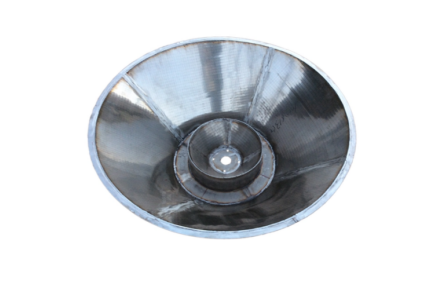
Not all centrifuge baskets perform the same way. Their efficiency depends heavily on design and manufacturing quality. A basket must match the application, the type of metal being processed, the particle size, the moisture load, and the operating speed of the equipment.
Important factors include:
· Wire or perforation structure
· Open area percentage
· Mechanical strength
· Balance during rotation
· Wear resistance
· Corrosion resistance
In metal recycling environments, baskets often face abrasive particles, continuous vibration, and chemically active fluids. If the basket wears too quickly or loses structural precision, the whole system becomes less efficient. Reliability drops, maintenance increases, and operating costs rise.
Basket material affects both performance and longevity. Stainless steel is commonly preferred for many industrial applications because it offers corrosion resistance and structural durability. In more demanding environments, the selection must also consider fatigue resistance and compatibility with specific process fluids.
From our experience, efficiency is not only about the initial separation result. It is also about how long that result can be maintained under real production conditions.
Downtime is one of the most expensive hidden costs in recycling operations. Even short interruptions can affect labor schedules, machine utilization, delivery commitments, and energy efficiency. When a centrifuge basket is poorly matched or poorly made, the risks increase.
Typical issues include:
· Premature wear
· Screen blockage
· Imbalanced rotation
· Reduced separation accuracy
· Unplanned replacement cycles
A well-designed basket helps reduce these problems. That does not mean zero maintenance, but it does mean more predictable operation. The difference is important. Predictable maintenance can be scheduled. Unexpected shutdowns disrupt the entire line.
For plant managers, that makes centrifuge baskets more than replacement parts. They become part of a broader operational efficiency strategy.
When we look at How Centrifuge Baskets Increase Efficiency in Metal Recycling, the answer is not limited to one benefit. These components support better solid-liquid separation, improve recovery of valuable metal particles, reduce retained moisture, lower downtime risk, and help maintain a more stable recycling process overall. In other words, they influence both productivity and product quality at the same time. From our point of view, centrifuge baskets should never be treated as a minor accessory in a recycling system. They are a working part of the process, and when they are properly designed and matched to the application, the difference is visible in output consistency, maintenance planning, and long-term operating cost. At Anping Shuoqiao Trading Co., Ltd., we believe that practical efficiency comes from choosing components that truly fit the demands of industrial separation. For recyclers, equipment buyers, and processing plants looking to improve metal recovery performance in a realistic way, it is worth discussing project requirements with an experienced supplier and learning more about the centrifuge basket options that best support your production goals.
They help separate liquids from metal solids more effectively, which improves recovery, reduces moisture content, and supports smoother downstream processing.
Yes. When properly designed, they can retain more fines during separation and reduce the amount of valuable material lost in waste or sludge streams.
Performance depends on basket material, aperture size, structural strength, balance, corrosion resistance, and how well the basket matches the specific recycling application.
Not always, but in demanding or highly specific recycling processes, a custom basket can improve separation accuracy, service life, and overall plant efficiency.


